"Cozy minimalist" sounds like a contradiction until you understand what it actually means. It's not about having a few stark pieces in a bare room. It's about choosing each piece with enough care that nothing needs to be hidden. Every textile earns its place — and together, they do the work of warmth.
The bedroom is where this approach is most powerful. You spend roughly a third of your life there. It should feel like it was designed for a human.
Start with the Duvet: The Foundation Layer
Everything in a cozy minimalist bedroom builds from the duvet. It's the largest visual element, and its texture and color tones set the entire palette.
The best material for a cozy minimalist bedroom is linen. Not cotton percale (too crisp, too hotel), not microfiber (too flat and synthetic-looking), not sateen (too glossy). Linen has inherent texture, gets softer with every wash, and its slight irregularity reads as quality, not disorder.
Stonewashed linen specifically — pre-washed so it arrives with the rumpled, soft quality that usually takes years to develop — is the starting point most design-forward bedrooms rely on.
The Color Rule for Minimalist Bedrooms
Work within a three-tone max: a neutral base, a warm accent, and a natural material.
For a warm oat linen:
- Base: the linen itself (oat/warm cream)
- Warm accent: terracotta, dusty rose, or muted rust — one pillow, one ceramc
- Natural material: the wood grain of your nightstand or headboard
This creates visual warmth without color confusion. The palette stays quiet; texture delivers the interest.
The Throw: Second Textile Layer
A throw draped over the foot of the bed or folded at a corner is what separates a made bed from a designed bed. It adds a third dimension — literally, height and shadow — that flat bedding can't achieve.
The throw should be different in texture from the duvet. If your duvet is linen (flat-weave texture), the throw should be something chunky — a hand-knit, a waffle weave, or a loosely woven cotton.
Material logic: you don't need matching colors. You need matching warmth. A chunky oatmeal throw on a warm oat duvet — different textures, same color family — looks considered. A gray microfiber throw on a warm linen duvet looks like an error.
Pillow Architecture: The Formula
Most people have too many pillows or the wrong size distribution. Here's the formula:
For a queen/king:
- Two European square pillows (26×26) at the back — in pillowcases that match your duvet
- Two standard sleeping pillows in front — in a contrasting sham or coordinating texture
- One accent pillow at center front — in a different material (velvet, linen, woven)
That's five pillows. Not eight. Not two. Five — they create enough height variation to make the bed look intentional without becoming something you have to remove every night.
The Case Against Matching Bedding Sets
Buying a complete matching bedding set — duvet, shams, decorative pillows, bed skirt, all in the same fabric — is the fastest way to make a bedroom look like a hotel or a furniture catalog. The goal is a space that looks like it was assembled by someone with taste, not purchased as a package.
Mix your materials deliberately:
- Linen duvet cover
- Cotton or linen standard pillowcases in a complementary texture
- A woven or velvet accent pillow
- A knit or waffle throw
Same color family. Different textures. That's the formula.
Nightstand Styling: 3 Items Maximum
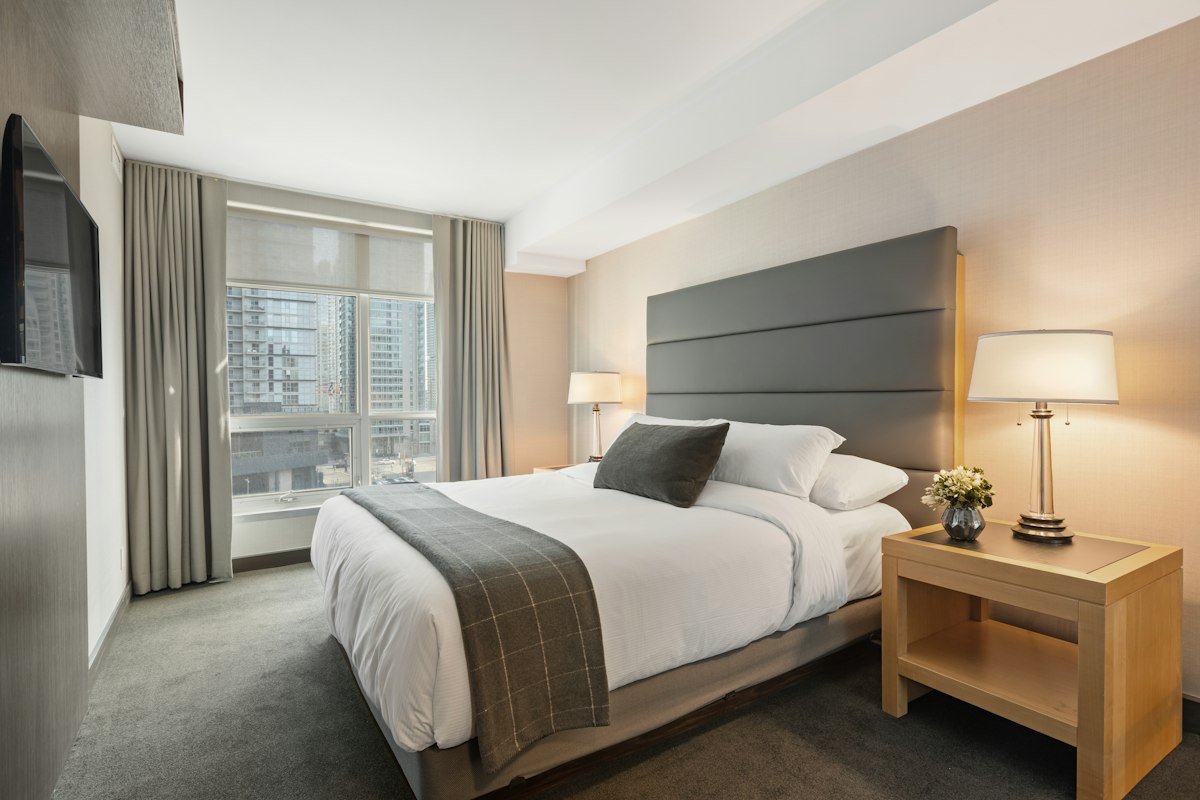
The nightstand is the sidebar to your bed's main story. Keep it to three items: a lamp, something living (a plant, a small vase with dried botanicals), and one functional item (your current book, a small dish for rings).
If your nightstand is too small for three items with breathing room, it's the wrong nightstand. The surface should be no more than 60% covered.
Light: The Most Underrated Bedroom Textile
Linen curtains are, technically, a textile — and they do more for bedroom atmosphere than any blanket or pillow. Unlined linen curtains filter morning light into warm gold. They move with air. They make a bedroom feel inhabited.
If you're not ready to commit to curtains, start with a linen roman shade. It delivers the same warmth and light quality at a smaller investment.
Making It Feel Cozy Without Making It Feel Cluttered
The tension in cozy minimalism is always: more warmth versus more stuff. Here's the resolution — invest in quality over quantity. A $189 stonewashed linen duvet that looks beautiful for ten years is a better cozy investment than five $39 synthetic throws layered on top of each other.
One excellent textile does more than three mediocre ones.
As an Amazon Associate, DunaDecor earns from qualifying purchases. This does not affect our recommendations.